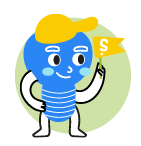
Kruemel-Heros
An app for people with Williams-Beuren syndrome: Use training to manage potentially dangerous situations and everyday scenarios

Kruemel-Heros
A learning app designed to help people with Williams-Beuren syndrome develop social skills by raising awareness of potentially dangerous situations and suggesting possible courses of action in everyday situations
The Williams Syndrome (WS)

The Williams syndrome
… also known as Williams-Beuren Syndrome (WBS), is a genetically caused neuropsychological developmental disorder that, in addition to a typical heart defect and various health impairments, is also associated with intellectual disability and a lifelong need for support.

The learning app
… offers people with WS, a rare condition, an appealing, tailored, and effective way to strengthen their social skills and behave more appropriately in everyday situations.

Who is behind the Kruemel-Heros app?
The Kruemel-Heros app is an initiative by Thomas Dubiel, the father of a son with Williams syndrome, who has been working for several years on issues related to the internet, smartphones, and other technologies for people with WBS. The app’s partners are Prof. Dr. Ingolf Prosetzky (Special Education/Inclusion Studies) from the Zittau/Görlitz University of Applied Sciences and the German Williams-Beuren Syndrome Association (Budesverband Williams-Beuren-Syndrom e.V.).
Prof. Dr. Prosetzky has been conducting research on WS for 15 years.

What was the starting point or the inspiration for *Kruemel-Heros*?
WS research has shown that those affected often exhibit a specific social-cognitive profile. One of the strengths typical of WS is that individuals are highly motivated to engage in social interactions (“hyperfriendliness”), even with strangers. Among their weaknesses is a difficulty in assessing social risks, which can quickly lead them into precarious situations when interacting with strangers. For a long time, this social behavior was considered genetically determined and not amenable to educational intervention. However, a Stranger Safety Training Program (WBS-SSTP) developed in the U.S. was able to demonstrate that adolescents and adults with WS can learn new and more appropriate social behaviors. The goal of the app is to convey the content of the SSTP using tablets or smartphones.
What problem does the Kruemel-Heros app address?
People with WS have a strong tendency to seek security through social interactions. The fear of being rejected by others or of disappointing them is often present. They quickly establish an emotional connection with others but often fail to understand the other person’s intentions. Due to a combination of a strong need for harmony, naivety, and difficulties setting boundaries, they are easily manipulated. The aforementioned WBS-SSTP has researched how strangers can easily lure people with WS into delicate situations and take advantage of them using various enticement strategies. The app helps raise users’ awareness of these enticement tactics. It highlights possible courses of action that can also be applied to manipulation attempts by people already known to those with WS.


Who is the target audience, and who is the Kruemel-Heros app designed for?
The app is primarily—but not exclusively—intended for people with WS who want to learn how to use modern technological devices and who sometimes find it difficult to respond appropriately in everyday situations. The app can be used together with parents and/or integration support staff to raise awareness of conflicts and possible solutions. With a prevalence of approximately 1 in 10,000, WS is classified as a rare disease, which is why the user base appears small. Although the aforementioned social-cognitive WS profile—comprising strengths and weaknesses—is unique, many people with intellectual disabilities experience difficulties regulating the closeness and distance in relationships and are, for example, three times more likely than the general population to become victims of sexual violence. Initial user tests have confirmed that the app is not only suitable for the WS but can also be interesting and manageable for people with autism or Down syndrome. The feedback also showed that participants reacted differently to everyday situations and thus demonstrated varying needs. Age played a minor role in this regard.
What approach was developed to achieve the goal?
A concept for the app was developed based on the WBS-SSTP. Building on this foundation, the app was implemented as a modern, target-audience-oriented application for mobile devices. The focus is on potential everyday situations, such as a stranger in a parking lot asking for help carrying their groceries to their car. The situations are depicted in animated video sequences. The user can choose from three possible responses. Explanations are provided for both the incorrect and correct answers to clarify the situation and offer feedback. The scenes can be repeated as often as desired. In addition to the pre-recorded animations, there is a personalized help section. Here, users can record photos and audio clips showing, for example, what to do if they miss a bus.

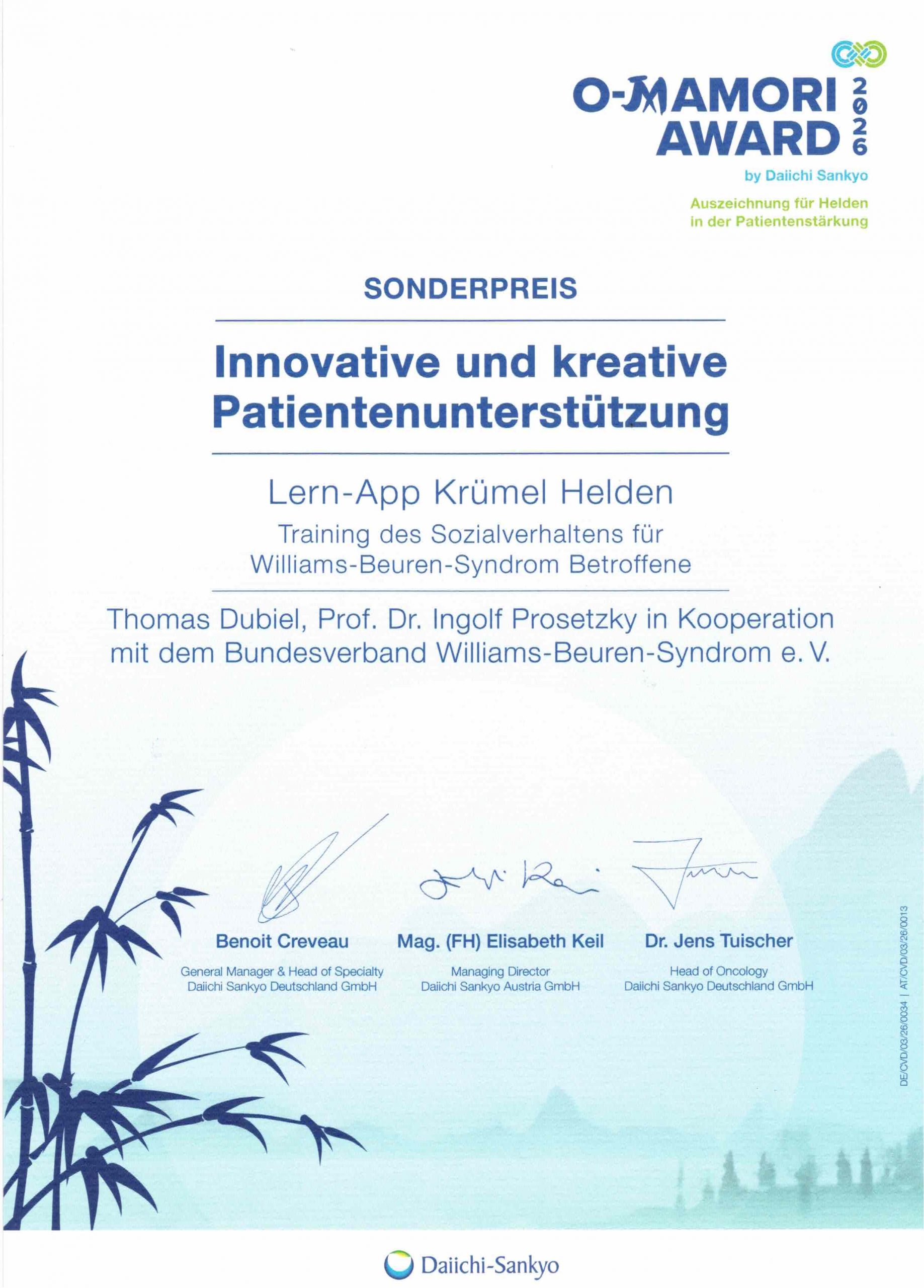
O-Mamori Award 2026 Winner
The Kruemel-Heros app was honored with the special prize for “Innovative and Creative Patient Support” at the 2026 O-Mamori Awards. Presented by Daiichi Sankyo, the award recognizes projects that use innovative and practical approaches to sustainably improve the quality of life and support for patients. The independent jury particularly highlighted Kruemel-Heero’s innovative digital approach as well as its creative and practical support for people with Williams syndrome. The app helps those affected better understand social situations and behave more confidently and appropriately in everyday life—in a playful, accessible way that is tailored to the specific needs of the target group.
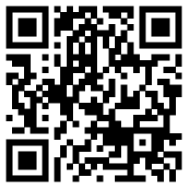
The Kruemel-Heros app is currently still in the testing phase. If you’d like to join the public beta test, please scan the QR code and follow the instructions.
The Kruemel-Heros were created with the kind support of the Bundesverband Williams-Beuren-Syndrom e.V. and AOK Plus Saxony/Thuringia.